
Red Flags of Online Grooming Every Parent Should Know
Online grooming is every parent’s nightmare. The thought of a predator targeting your child through their phone, tablet, or gaming console is terrifying—and unfortunately, it’s more common than most people realise.
According to recent UK data, one in five children aged 11-17 have been contacted online by someone they didn’t know. Not all of these contacts are dangerous, but some are predators using sophisticated tactics to build trust, isolate victims, and ultimately exploit them.
As a parent, you can’t monitor every message, friend request, or gaming chat. But you can learn the warning signs and teach your teen to recognise them too.
What Is Online Grooming?
Grooming is when an adult (or sometimes an older teen) builds a relationship with a child to gain their trust for the purpose of sexual exploitation, abuse, or manipulation.
It doesn’t happen overnight. Predators are patient, often spending weeks or months building rapport before making inappropriate requests.
The scariest part? It can happen on any platform—Instagram, TikTok, Snapchat, Roblox, Fortnite, Discord, WhatsApp. If your child can send or receive messages, they’re potentially at risk.
8 Red Flags of Online Grooming
1. Excessive Attention and Compliments
Groomers shower children with attention, compliments, and validation. They make the child feel “special,” “mature,” or “understood” in ways they might not feel at home or school.
Example: “You’re so much smarter than other kids your age” or “I feel like we really get each other.”
2. Fast Friendship or “Instant Connection”
Predators push for intimacy quickly. Within days, they’re saying things like “you’re my best friend” or “I’ve never felt this close to anyone.”
This artificial closeness creates emotional dependency, making the child less likely to question inappropriate requests later.
3. Secrecy Pressure
One of the biggest warning signs is when someone asks your child to keep conversations secret from parents, siblings, or friends.
Example: “Don’t tell your parents about me—they won’t understand” or “This is just between us.”
Legitimate friendships don’t require secrecy.
4. Gifts, Money, or In-Game Items
Groomers often offer gifts, money, or gaming credits to build obligation and gratitude. This creates a sense of debt: “I’ve been so generous to you—can you send me a photo?”
Even small gifts (like game skins or iTunes vouchers) are red flags if they come from someone your child only knows online.
5. Isolation Tactics
Predators try to isolate victims from friends and family. They might:
- Encourage your child to delete other friendships
- Criticise family members (“Your parents don’t understand you like I do”)
- Monopolise their time with constant messages
If your teen is spending hours talking to one person online and withdrawing from real-life relationships, investigate.
6. Personal Questions Too Soon
Groomers ask personal questions early to gather information and identify vulnerabilities:
- “Where do you go to school?”
- “What time do your parents get home?”
- “Are you home alone right now?”
They may also ask about your child’s emotional state—looking for loneliness, insecurity, or family conflict they can exploit.
7. Inappropriate or Sexual Content
This is the most obvious red flag, but it doesn’t always start aggressively. Groomers often:
- Share “accidental” sexual images
- Ask about your child’s body or relationships
- Introduce sexual topics gradually (“Have you kissed anyone yet?”)
- Request photos—starting innocent, then escalating
By the time explicit requests are made, the child is emotionally invested and may feel trapped.
8. Pressure to Meet Offline
Once trust is established, groomers push for in-person meetings. They might suggest:
- Meeting in secret (“Let’s keep it a surprise”)
- Meeting alone (“I’ll pick you up after school”)
- Using excuses to justify the meeting (“I want to give you that gift in person”)
No legitimate online friend asks a child to meet in secret.
What Should You Do?
Talk to Your Teen (Without Panicking)
If you notice these red flags, don’t react with anger or panic. Your child needs to feel safe coming to you, not afraid of punishment.
Start a calm conversation:
- “I noticed you’ve been messaging someone a lot. Tell me about them.”
- “Has anyone online ever made you uncomfortable?”
- “You know you can tell me anything, right? Even if you think you’re in trouble.”
Check Privacy Settings Together
Review privacy settings on social media, games, and apps. Limit who can contact your child, and teach them to:
- Accept friend requests only from people they know offline
- Block and report suspicious accounts
- Never share personal details (school, address, routines)
Report Suspicious Behaviour
If you believe your child is being groomed:
- Don’t delete evidence—take screenshots
- Report to the platform (Instagram, TikTok, etc.)
- Report to CEOP (Child Exploitation and Online Protection): www.ceop.police.uk
- Contact police if you believe a crime is being committed
Empower Your Teen with Knowledge
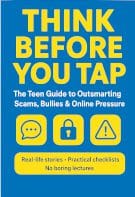
The best defence against grooming is education. Teens who understand grooming tactics are far less likely to fall victim.
Think Before You Tap is a practical guide that teaches 11-16 year olds how to:
- Spot red flags of grooming and predatory behaviour
- Protect personal information online
- Respond safely to suspicious contacts
- Build healthy boundaries in digital friendships
The book includes real-world examples, reflection exercises, and actionable safety strategies—without lectures or scare tactics.
Get your copy on Amazon or read free with Kindle Unlimited.
Free teaching resources are also available for schools and youth organisations at netneo.co.uk/free-download-resource-hub.
Final Thoughts
Online grooming is terrifying, but awareness is power. By learning the red flags, having open conversations, and giving your teen the tools to protect themselves, you can significantly reduce the risk.
Trust your instincts. If something feels wrong about your child’s online interactions, investigate. It’s better to ask difficult questions than to ignore warning signs.
Your child’s safety is worth the uncomfortable conversation.